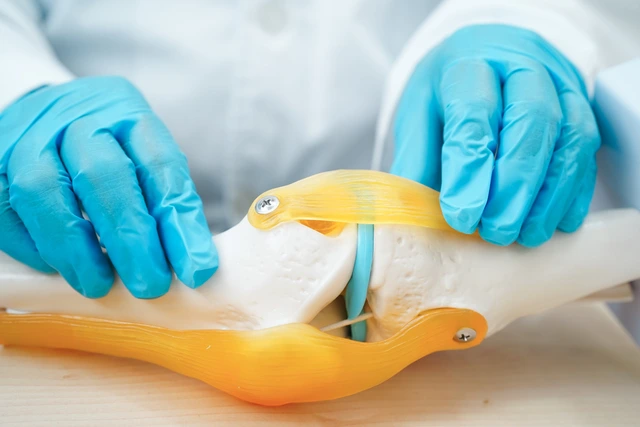
Knee Replacement Surgery has become one of the most successful and reliable orthopaedic procedures for people suffering from severe knee pain, stiffness, or mobility issues. Whether caused by osteoarthritis, rheumatoid arthritis, injury, or age-related wear and tear, knee problems can affect daily life, making even simple activities like walking or climbing stairs painful. This blog will help you understand what Knee Replacement Surgery is, how it works, its types, risks, recovery timeline, and why choosing a specialised center like Kolekar Hospital ensures better outcomes.
What Is Knee Replacement Surgery?
Knee Replacement Surgery, also known as knee arthroplasty, is a procedure where damaged knee joint surfaces are removed and replaced with artificial implants (prostheses). These artificial parts recreate the natural movement of the knee, reduce pain, and restore mobility.
It is recommended when:
- Pain persists even after medications, physiotherapy, or injections
- Joint deformity like bow legs or knock knees develops
- Knee stiffness affects basic activities
- X-rays show significant joint damage
- Pain affects sleep and daily routines
Knee Replacement Surgery offers long-term relief and can significantly improve the quality of life for patients suffering from chronic knee conditions.
Who Needs Knee Replacement Surgery?
Most candidates for Knee Replacement Surgery fall into these categories:
1. Osteoarthritis
This is the most common reason. The protective cartilage in the knee wears away, leading to bone-on-bone friction.
2. Rheumatoid Arthritis
An autoimmune condition causing chronic inflammation and severe joint damage.
3. Post-Traumatic Arthritis
Injury-related cartilage or ligament damage eventually leads to arthritis.
4. Knee Deformities
Excessive bending of the knee, bowing, or misalignment can worsen pain.
5. Failed Previous Surgeries
Patients who have had unsuccessful knee procedures may require revision Knee Replacement Surgery.
Types of Knee Replacement Surgery
Understanding the types helps patients and families make informed decisions.
1. Total Knee Replacement (TKR)
The entire knee joint is replaced with prosthetic components.
Recommended for:
- Advanced arthritis
- Severe joint degeneration
- Patients with deformity or long-term knee damage
2. Partial Knee Replacement (PKR)
Only the damaged portion of the knee, medial, lateral, or patellofemoral, is replaced.
Benefits include:
- Smaller incision
- Faster recovery
- Less bone removal
3. Robotic Knee Replacement Surgery
Robotic-assisted tools help the surgeon perform the procedure with greater accuracy, improving implant fit and longevity.
4. Revision Knee Replacement
Used when a previous implant wears out, loosens, or fails due to infection or trauma.
How Knee Replacement Surgery Is Performed: Step-by-Step Procedure
The process begins with preoperative evaluation and ends with rehabilitation. Here is a detailed overview of the procedure:
1. Preoperative Assessment
- X-rays, CT scans, or MRI
- Blood tests
- Heart evaluation
- Discussion about anesthesia options
- Pre-surgery physiotherapy
2. Anesthesia
Patients receive either:
- Spinal anesthesia
- General anesthesia
The type depends on the patient’s health and preference.
3. Incision and Exposure
A surgical incision is made over the knee to access the joint.
4. Removal of Damaged Tissue
The surgeon removes damaged cartilage, worn-out bone, and any irregular surfaces.
5. Implant Placement
Prosthetic components made from metal and polyethylene are fixed on the thigh bone, shin bone, and kneecap.
6. Alignment and Balancing
Proper alignment is crucial for smooth knee movement and implant longevity.
7. Closure and Dressing
The incision is closed with sutures or staples, followed by sterile dressing.
8. Postoperative Monitoring
Patients are shifted to a recovery room where vital signs are observed.
Components Used in Knee Replacement Surgery
| Component | Material Used | Function |
| Femoral Component | Metal (Cobalt-Chromium) | Replaces thigh bone surface |
| Tibial Component | Metal + Polyethylene | Replaces shin bone surface |
| Patellar Component | Polyethylene | Replaces knee cap surface |
| Spacer | Polyethylene | Ensures gliding movement |
Benefits of Knee Replacement Surgery
Patients undergoing Knee Replacement Surgery can expect:
- Long-term relief from knee pain
- Increased mobility and flexibility
- Ability to walk comfortably
- Improved knee alignment and stability
- Better quality of life
- High success rate (over 95% in most cases)
For many people, Knee Replacement Surgery restores the ability to participate in daily activities, travel, or even resume low-impact exercises.
Risks and Possible Complications of Knee Replacement Surgery
Although Knee Replacement Surgery is safe, like any major procedure, there are potential risks. Understanding them helps patients stay alert during recovery.
1. Infection
Deep or superficial wound infections may require antibiotics or additional surgery.
2. Blood Clots (DVT)
Clots can form in the leg veins, especially during the initial days of recovery.
3. Implant Loosening
Rare but possible if the implant wears out over time.
4. Nerve or Blood Vessel Injury
Though rare, nearby nerves or blood vessels may get affected.
5. Stiffness in the Knee
Patients may experience limited knee movement if physiotherapy is delayed.
6. Allergic Reaction to Metals
Some patients may experience irritation from implant materials.
7. Persistent Pain
A small percentage of patients may continue to feel pain despite successful surgery.
Recovery After Knee Replacement Surgery
Recovery is a combination of rest, physiotherapy, lifestyle modifications, and regular follow-ups.
Day 1–3
- Mild walking with support
- Pain and swelling management
- Leg exercises guided by physiotherapists
Week 1–4
- Increased walking distance
- Improved knee bending
- Transition from walker to stick
- Reduced pain medications
Month 1–3
- Strengthening exercises
- Better balance and stability
- Return to routine activities
Month 3–12
- Most patients walk comfortably
- Implant adjusts to natural movement
- Resuming light sports like swimming or cycling (only after doctor approval)
Expected Recovery Timeline After Knee Replacement Surgery
| Time Period | Patient Progress |
| 1–2 Weeks | Walking with support, reduced swelling |
| 3–6 Weeks | Able to walk comfortably, increased mobility |
| 2–3 Months | Improved knee strength, return to normal routine |
| 6–12 Months | Full recovery, implant functioning optimally |
Life After Knee Replacement Surgery
Most patients experience a dramatic improvement in lifestyle after Knee Replacement Surgery. With proper care, the artificial knee can last 15–20 years or more.
Things Patients Can Do
- Walking
- Swimming
- Climbing stairs
- Cycling
- Yoga (with modifications)
Things to Avoid
- High-impact sports
- Heavy weight lifting
- Running or jumping
- Twisting motions
Cost of Knee Replacement Surgery
The cost of Knee Replacement Surgery varies based on:
- Type of implant
- Surgeon’s expertise
- Hospital facilities
- Type of surgery (Total/Partial/Robotic)
- Diagnostic tests
- Post-operative physiotherapy
Kolekar Hospital offers advanced knee care with transparent pricing and personalised treatment plans.
Why Choose Kolekar Hospital for Knee Replacement Surgery?
Kolekar Hospital is known for offering specialised orthopaedic care with advanced technology and expert surgeons. Here’s why patients trust us:
- Experienced knee replacement specialists
- High-quality implants with long lifespan
- Robotic and minimally invasive surgical options
- Excellent physiotherapy and rehabilitation support
- Advanced infection control systems
- Personalised treatment plans
- High success rate and patient satisfaction
Our multidisciplinary team ensures that every patient receives complete support from diagnosis to rehabilitation.
Frequently Asked Questions (FAQs)
1. How long does Knee Replacement Surgery take?
Usually 1–2 hours depending on the type of surgery.
2. When can patients walk after Knee Replacement Surgery?
Most patients begin walking with support within 24 hours.
3. How painful is the recovery?
Mild to moderate pain is expected initially and is well managed with medication and physiotherapy.
4. Is Knee Replacement Surgery safe for senior citizens?
Yes, it is safe when performed with proper evaluation and monitoring.
5. How long does the implant last?
Most implants last 15–20 years or more with proper care.
Conclusion
Knee Replacement Surgery is a life-changing procedure for individuals struggling with chronic knee pain, joint damage, or mobility limitations. With proper evaluation, expert surgical care, and structured rehabilitation, patients can return to an active, pain-free lifestyle. If you or a loved one is considering Knee Replacement Surgery, Kolekar Hospital offers reliable, advanced, and personalised care for the best outcomes.